I will recommend Titan and Electric to everyone I know. Not only are they professional but they honored everything they said and got the job done quickly and efficiently while still being friendly. I called in the morning and I had my new water heater by the afternoon. Thank you so much for a wonderful job!
South Tampa Electrical Services
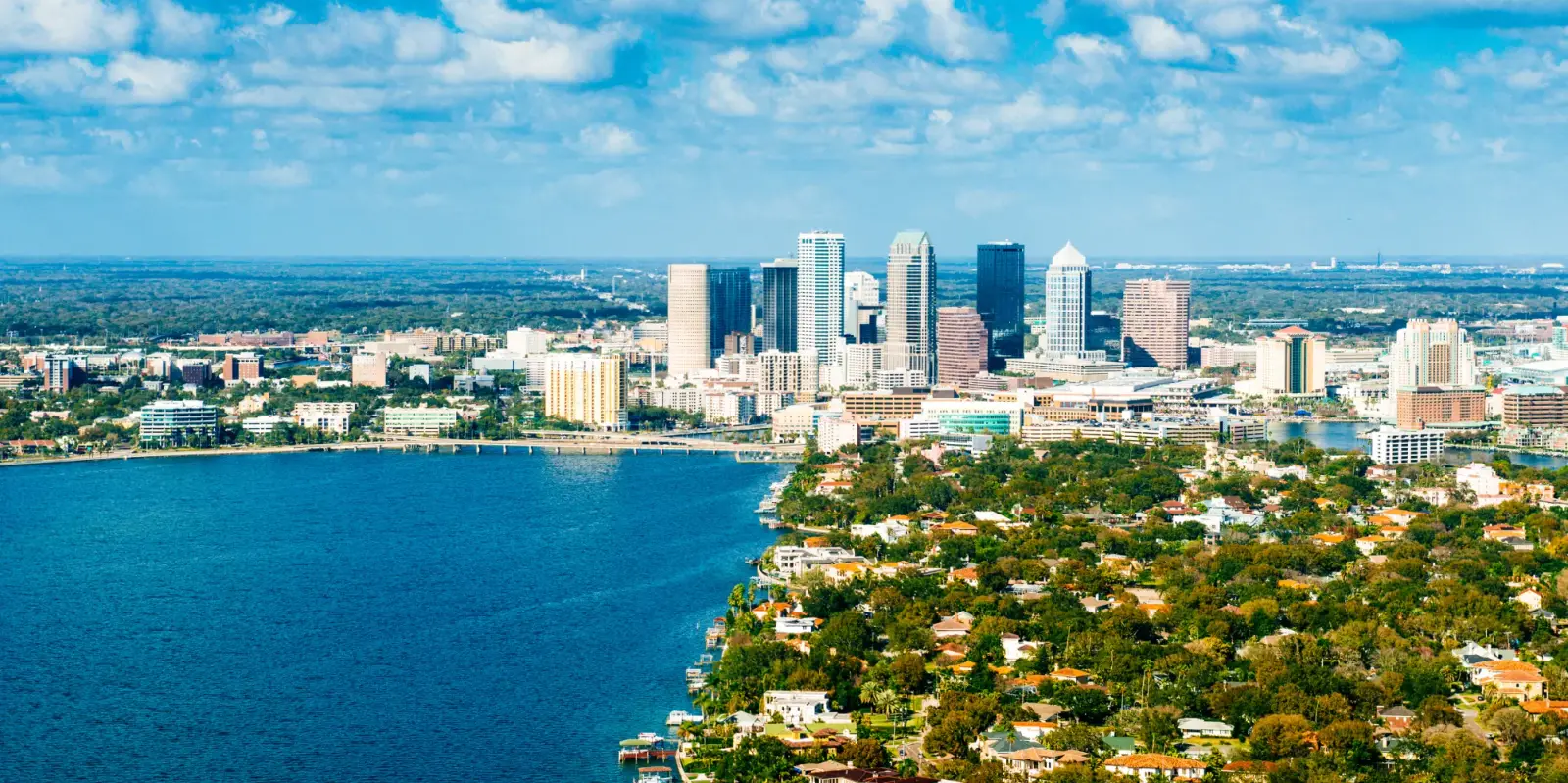
South Tampa is the most electrically diverse residential market in Hillsborough County. The peninsula bounded by the Hillsborough River, Tampa Bay, and Gandy Boulevard. Covering ZIP codes 33606, 33609, 33611, 33616, 33621, and 33629. Holds every generation of residential electrical system ever installed in Florida. Knob-and-tube from the 1880s-1930s in original Hyde Park. Cloth-jacket Romex from the 1940s-1950s. Aluminum branch circuits from 1965-1973 in postwar Palma Ceia and Beach Park. Federal Pacific Stab-Lok and Pushmatic panels from the 1960s-1980s. Modern 200A Square D QO and Eaton CH installs in 2020s rebuilds. Every era is in service simultaneously, often inside the same house, and every era requires a different remediation playbook.
Titan Plumbing & Electric has worked South Tampa electrical every week since 1994. We know which Hyde Park bungalows still have live knob-and-tube in the attic running through original loose-fill insulation. We know which Palma Ceia subdivisions had Federal Pacific installed at build-out. We know which 1968-1972 Beach Park ranches were wired in solid aluminum branch and now need COPALUM or AlumiConn remediation to stay insurable. And we know which Bayshore and Davis Islands waterfront lots are now in FEMA Zone VE with new electrical service equipment elevation requirements after Hurricanes Helene and Milton in 2024. License numbers EC13012958 (electrical) and CBC057910 (general contractor), both verifiable at myfloridalicense.com.
Call (813) 933-8010 for same-day electrical service anywhere in South Tampa, or schedule online. What follows is a detailed, neighborhood-aware breakdown of how we work in 33606, 33609, 33611, and 33629. And why South Tampa electrical demands a fundamentally different approach than the suburbs.
South Tampa Neighborhoods We Wire
South Tampa is fifteen distinct neighborhoods stitched together. Each has its own dominant build era, its own original electrical era, and its own typical issues. We work in all of them.
- Hyde Park / Hyde Park North. 33606. 1880s-1920s originals. Knob-and-tube and 60A fuse panel territory. HARC review on visible exterior equipment
- SoHo (South Howard). 33606. 1920s bungalows mixed with modern infill
- Davis Islands. 33606. 1924 dredged. Mediterranean Revival 1925-1940s plus mid-century ranches and modern dock-out rebuilds
- Bayshore Beautiful / Bayshore Boulevard. 33611, 33629. 1930s-1960s along the bay with 2010s-2020s teardown rebuilds. FEMA Zone VE on waterfront
- Palma Ceia / Palma Ceia West. 33629. 1940s-1960s slab ranches. Heavy Federal Pacific and aluminum branch wiring exposure
- Beach Park. 33609. 1930s-1950s Mediterranean and ranch. Substantial Federal Pacific exposure
- Culbreath Isles. 33609. 1960s-1970s waterfront estates. Dock electrical per NEC 555. Aluminum branch wiring era
- Sunset Park. 33629. 1940s-1960s slab ranches
- Virginia Park. 33611. 1950s slab ranches
- Westshore Marina District / Gandy. 33611, 33616. Modern townhomes, mid-rise, and high-rise condos
- Port Tampa. 33616. Pre-WWII bungalows mixed with 1950s-1960s ranches
- MacDill area. 33621. Surrounding civilian housing
- Interbay / Gandy corridor. 33611. 1940s-1960s ranches with substantial recent infill
What Makes South Tampa Electrical Work Different
Three forces define South Tampa electrical and nothing else in Tampa Bay looks quite like it. First, age and layered systems. The 1880s-1920s Hyde Park housing stock is the oldest residential electrical in continuous service in Tampa. Many Hyde Park homes have an original knob-and-tube backbone that was extended with cloth-jacket Romex in 1948, augmented with NM-B in 1971, partially rewired during a 1995 kitchen remodel, and topped off with a 2018 panel upgrade. The result is a house with five generations of wiring sharing the same junction boxes. We diagnose accordingly. Second, postwar systems with documented liability. The 1955-1985 Palma Ceia, Beach Park, Sunset Park, and Virginia Park ranches were built during the era of Federal Pacific Stab-Lok, Zinsco, Pushmatic, and Challenger panels. All of which are documented fire risks and active homeowner-insurance liabilities in Florida. Aluminum branch wiring in 1965-1973 construction adds another layer. Third, flood zone. Most of the South Tampa peninsula sits in FEMA Special Flood Hazard Area, with bay-facing waterfront in Zone VE. Hurricane Helene's 7.2-foot surge in September 2024 redefined what counts as a survivable installation, and FL Building Code Residential §R322 requires electrical service equipment in flood zones to be elevated to or above base flood elevation plus the locally-adopted freeboard.
Add to that: salt-air corrosion on exterior service equipment, lightning density as high as anywhere in the United States, mature canopy that drops branches on overhead service drops in every named storm, and the highest concentration of high-end remodels and new construction in the city. South Tampa electrical work is high-stakes and detail-driven and we treat it accordingly.
Knob-and-Tube Wiring in Hyde Park
Knob-and-tube (K&T) wiring was the standard residential electrical system from roughly 1880 through 1940. Single-insulated copper conductors run open through framing, supported on porcelain knob insulators where they cross studs and joists, and protected by porcelain tubes where they pass through holes in framing members. Hyde Park, the original SoHo blocks, and the oldest pre-causeway sections of South Tampa contain the K&T inventory in this metro. Most of it has been removed by now, but we still find live K&T runs in attics, in plaster walls behind original built-ins, and in basements (rare in South Tampa but a few exist).
K&T is not inherently dangerous when intact and undisturbed. The system was robust, the insulation chemistry was reasonable for its era, and properly-installed K&T is still a safe installation. The problems are layered on by 100 years of subsequent work. There is no equipment grounding conductor (so any modern three-prong receptacle on a K&T circuit must be GFCI-protected and labeled "No Equipment Ground" per NEC 406.4(D)(2)(c)). The original insulation is rubberized cotton that becomes brittle and crumbles when handled. K&T cannot be buried in modern thermal insulation. Doing so causes the conductors to overheat because the original design depended on free air for cooling. This is the most common safety issue we find in retrofitted Hyde Park attics: blown-in cellulose buried over live 1925 K&T runs.
Decades of modifications and splices have often been done without code-compliant junction boxes. Live splices wrapped in friction tape sitting in the attic, K&T conductors spliced into Romex with wire nuts and no enclosure, branch circuits extended to bathrooms and kitchens that did not exist in 1925. Insurance carriers in Florida have largely stopped writing new policies on homes with live K&T, and renewals on existing policies are increasingly conditioned on K&T removal.
We rewire K&T circuits to current NEC. The standard scope is to identify every live K&T run with a non-contact tester and circuit tracer, abandon the K&T at the panel, pull new copper NM-B (Romex) on the same general routing, install code-compliant boxes at every device and junction, and provide a labeled grounded receptacle at every former two-prong location. On Hyde Park homes that we rewire we coordinate with plaster repair specialists so we are not leaving you with drywall patches in original plaster walls.
Federal Pacific Stab-Lok, Pushmatic, and Zinsco Panel Replacement
If your South Tampa home was originally electrified between 1955 and 1985 and has not had a panel upgrade, there is a substantial probability you have a Federal Pacific Stab-Lok, Pushmatic, Zinsco, or Challenger panel. These are not theoretical fire risks. Independent testing has documented Federal Pacific Stab-Lok breakers failing to trip on overload at rates between 25% and 65% (depending on the specific breaker model and age). Zinsco panels suffer aluminum bus bar corrosion at the breaker contact, leading to arcing inside the panel that can ignite the dust and debris that accumulates over 50 years. Pushmatic breakers were a Bulldog/ITE design that drift out of calibration with age and do not have current replacement parts in the supply chain. Challenger panels with FPE-style breakers carry similar concerns.
Florida insurance carriers have begun non-renewing policies on homes with these panels. A growing number will not bind a new policy at all without documentation of replacement. You may not be able to refinance, get an equity line, or sell without addressing the panel. The good news is that replacement is straightforward and well-defined.
Our standard South Tampa panel upgrade is a 200-amp Square D QO or Eaton CH main breaker panel with copper-bus construction, plug-on neutral, and a Type 2 whole-home surge protector at the panel. We add combination AFCI/GFCI breakers on circuits where current code requires (most living-area circuits in renovations and new construction per NEC 210.12), GFCI-only breakers on bathroom, kitchen, garage, exterior, and laundry circuits per NEC 210.8, and a properly-sized neutral and grounding electrode system per NEC 250. We pull the permit through City of Tampa Construction Services Division, coordinate the TECO disconnect/reconnect, and verify the grounding electrode system meets current NEC 250.50/250.52 (often requires adding supplemental ground rods on older homes that have only an original water-pipe bond).
Many South Tampa panel upgrades also justify a service upgrade from 100 amps to 200 amps at the same time. Modern loads. EV chargers, heat pump pool heaters, tankless water heaters, induction ranges, mini-split HVAC, large pool pumps. Routinely push a 100-amp service over the limit on a current load calc per NEC 220. We do the math on-site and quote the service upgrade and panel together so you do not pay twice for permitting and TECO coordination.

Aluminum Branch Wiring Remediation
South Tampa homes built or substantially remodeled between roughly 1965 and 1973. Particularly in Palma Ceia, Beach Park, parts of Sunset Park, and the older Bayshore corridor. Were wired with solid aluminum branch circuits. Solid 12 AWG and 10 AWG aluminum run to receptacles, switches, and lighting. The materials shortage that drove the substitution of aluminum for copper in branch circuits in that era ended in 1973 when manufacturers and the NEC moved away from solid aluminum on small-conductor circuits, but the homes wired in that window are still in service.
Aluminum at termination points expands and contracts with thermal cycling at a different rate than the copper screw, brass terminal, or steel binding screw it is connected to, and aluminum oxidizes when exposed to air. Over decades the terminations loosen, oxidize, and develop high-resistance connections that overheat. Symptoms include warm cover plates at receptacles or switches, intermittent outlet operation, lights that flicker when a switch is operated, the smell of hot plastic at devices, and in the worst case, ignition of the device or surrounding material. The U.S. Consumer Product Safety Commission documented that homes with aluminum branch wiring are 55 times more likely to have one or more connections at fire-hazard conditions than homes with copper.
Two methods are recognized as gold standard for remediation. COPALUM crimps (the original CPSC-recommended method): a copper pigtail is crimped onto the aluminum conductor with a high-pressure proprietary AMP/Tyco tool that cold-welds the copper-aluminum joint into a single mechanical/electrical unit. The remediated joint is then connected to the device with a copper-to-copper screw connection. AlumiConn lugs (a more recent CPSC-accepted method): a tin-plated brass lug with separate set-screw chambers for the aluminum and copper conductors, torqued to manufacturer specification. AlumiConn is more accessible and less expensive than COPALUM and is the more common choice for Florida homeowners balancing safety and cost.
We do not recommend wire-nut-with-paste retrofits (Ideal Twister, etc.). They have a documented failure rate and are not accepted by most Florida insurance carriers. We also do not recommend partial remediation. Either every connection in the home is remediated or the home remains at risk. Florida insurance carriers vary in what they accept. Some require full copper rewire, others accept COPALUM, others accept AlumiConn. We document the remediation thoroughly and provide the documentation package to your insurer or buyer.
FEMA Flood Zone Electrical Service Equipment Elevation
Most of South Tampa sits in a FEMA Special Flood Hazard Area. The interior is largely Zone AE (1% annual chance flood with a published base flood elevation). The bay-facing waterfront on Bayshore, Davis Islands, Culbreath Isles, and the southern tip of MacDill is largely Zone VE (the 1% flood plus wave action). Hurricane Helene in September 2024 produced peak surge of 7.2 feet above mean higher high water at East Bay. Tampa Bay's record. And the City of Tampa's post-event substantial-damage and substantial-improvement determinations have triggered new construction-elevation requirements on a substantial number of South Tampa parcels.
FL Building Code Residential §R322 (Flood-Resistant Construction) and ASCE 24 require that electrical service equipment in flood hazard areas be elevated to or above base flood elevation plus the locally adopted freeboard. Tampa's adopted freeboard is one foot above BFE. Practically, that means new meter mains, service-disconnect panels, sub-panels, generators, transfer switches, EV charger circuits, and pool/dock electrical equipment on substantially-improved structures or new construction in Zones AE/VE must be installed above BFE + 1 foot. The City of Tampa Floodplain Administrator administers substantial-damage and substantial-improvement determinations and we coordinate with their office on every flood-zone job.
What this looks like in the field: meter cans and main disconnects mounted on elevated service masts that bring the equipment above BFE rather than at the typical 5-6 foot height. Sub-panels relocated from garage exterior walls to upstairs interior locations. Generator pads built up with poured concrete or composite to elevate the generator above BFE plus freeboard. Pool equipment pads elevated. Dock disconnects and shore-power pedestals elevated above MLLW per NEC 555.13. Transfer switches and battery-backup equipment located on the second floor or in elevated mechanical rooms.
Where elevation is impractical we design dry-floodproofed enclosures with submersible-rated equipment per ASCE 24, but the strong preference is to physically locate the equipment above the design flood elevation. A flooded electrical service is not just a code problem. It is a fire risk during pump-out and a fatality risk during reconnection. Every post-Helene/Milton service we reconnected required full inspection, drying, and in many cases full replacement of meter, main, and any submerged feeders. Elevation is cheaper than rebuild.
Hurricane Helene and Milton Post-Flood Electrical Restoration
Hurricanes Helene (September 26, 2024) and Milton (October 9, 2024) put substantial water and wind into South Tampa. Helene's storm surge inundated low-lying portions of Bayshore, Davis Islands, Beach Park waterfront, Culbreath Isles, and the southern reaches of MacDill at flood depths up to 5-7 feet inside structures. Milton followed two weeks later with sustained tropical-storm-force winds across the peninsula, downing trees onto overhead service drops and causing widespread outages. Tampa Electric (TECO) restored essentially all customers in Hillsborough County by October 16, 2024.
Saltwater intrusion damages residential electrical systems in specific, predictable, and dangerous ways. Submerged meter cans corrode internally and arc when re-energized. Service panels with submerged bus bars and breakers must be replaced. They cannot be dried out and returned to service. Receptacles and switches at and below the high-water line are total losses. Romex (NM-B) cable that was submerged is generally a replacement candidate. The paper insulation around the conductors absorbs water and the insulation degrades. Branch-circuit panels, sub-panels, and generator transfer switches at or below the high water line require full replacement. Air-conditioning condensers, pool pumps, well pumps, and other 240V equipment that was submerged require professional inspection and almost always replacement.
We do post-flood electrical assessments, document damage for insurance claims with photos and written reports, replace flood-damaged equipment to current code (which in flood zones means elevation per §R322), and coordinate with TECO for service reconnects. Critically, we do not energize a service that has not passed a City of Tampa inspection after flood damage. The reconnect-permit process exists for life-safety reasons and shortcuts here have killed people. Every post-Helene reconnect we did in South Tampa included a permit, an inspection, and a documented rebuild path.
Whole-Home Generator Installation in South Tampa
South Tampa loses power reliably during named storms and routinely during summer thunderstorms. The peninsula's mature live oak canopy is beautiful and is also why limbs come down on overhead lines every named storm. A whole-home Generac, Kohler, or Briggs & Stratton standby generator runs on natural gas (TECO Peoples Gas, available almost everywhere in South Tampa) or propane and provides automatic transfer in 10-30 seconds when utility power drops.
Setbacks are tight on South Tampa lots. Per NFPA 37 and manufacturer instructions, generators must be a minimum of 5 feet from any door, window, or fresh-air intake; 18 inches from the structure on the long service side; and on a concrete or composite pad with proper drainage. Many South Tampa lots also fall in flood zones AE or VE, which requires the generator pad to be elevated above BFE plus freeboard per FL Building Code §R322. We do the site survey, calculate the elevation requirement, coordinate the gas line with TECO Peoples Gas, and pull the permit through City of Tampa.
Sizing matters. A 22kW air-cooled unit will run a typical 2,500 sq ft Bayshore home with two AC compressors and full kitchen load. Larger Beach Park, Culbreath Isles, and Davis Islands estates with three AC compressors, pool equipment, dock pumps, and elevated mechanical loads generally need 26kW air-cooled or a 30-48kW liquid-cooled generator. We do a real load calc per NEC 220, not a square-foot rule of thumb.
Hyde Park Historic District generator installations require Architectural Review Commission approval for visible exterior placement. Davis Islands has architectural covenants on certain blocks that constrain generator color and screening. We coordinate the ARC application before equipment is ordered and we plan screen-wall details that have been approved historically. We do not order equipment and then discover we cannot install it.
EV Charger Installation in South Tampa
We install Tesla Wall Connectors, ChargePoint Home Flex, Wallbox Pulsar Plus, JuiceBox 40, Emporia, and hardwired NEMA 14-50 receptacles to manufacturer specification and to NEC Article 625. Most South Tampa garages run 30-48 amps on a dedicated 240V circuit, which sustains 30-44 miles of range per charging hour. Where the existing 100-amp service is tight, we either upgrade to 200A (especially when combined with a Federal Pacific replacement) or install a smart load-management device (DCC, NeoCharge, Tesla's integrated load management) so that a service upgrade is not required.
Several South Tampa garage configurations are common in our work. Detached carriage-house garages on Hyde Park lots that require trenching and conduit to bring 240V from the main house. Two-car attached garages on Palma Ceia and Sunset Park ranches with original 100A panels that require either a panel upgrade or load management. Bayshore high-rise condo parking garages where the install runs through the HOA and requires coordination with the building's electrical engineer. We have done all of these and we know which condos have approved EVSE installation processes.
Surge Protection and Lightning on the Peninsula
Tampa is the lightning capital of the United States. The South Tampa peninsula sits between two large bodies of water (Tampa Bay and Old Tampa Bay) that drive convection. Afternoon and evening thunderstorms from May through October deliver dense lightning over the peninsula, and the bayfront blocks on Bayshore, Davis Islands, and Culbreath Isles see lightning attachments at residential structures with measurable frequency. Whole-home Type 2 surge protection at the panel is essential for any South Tampa home.
We install Eaton CHSPT2ULTRA, Square D HEPD80 / Surge Breaker SDSA, Siemens BoltShield FS140, and Leviton 51120-1 panel-mounted SPDs sized to the home's service. These devices clamp surges at the panel before they reach branch circuits and connected equipment. We layer Type 3 point-of-use protection on AV racks, home networking equipment, refrigerator/wine cooler circuits, and motorized window treatments where the homeowner wants the additional layer.
For homes on Bayshore, Davis Islands, and Culbreath Isles waterfront where direct lightning attachment is a real risk, we coordinate with Florida-licensed lightning protection contractors for full UL 96A air terminal (lightning rod) systems. A lightning protection system is not a surge protector. They serve different purposes. But on a 1928 Mediterranean Revival on Bayshore the LPS is justified.
Hyde Park Historic District ARC Review for Visible Exterior Equipment
Hyde Park is a locally designated historic district under the City of Tampa Architectural Review Commission. Any work that affects the exterior of a contributing structure or a non-contributing structure within the district requires a Certificate of Appropriateness from ARC before the building permit can be issued. ARC review is administered by City of Tampa Historic Preservation staff (813-274-3100, option 3) and follows the Hyde Park Design Guidelines and the Secretary of the Interior's Standards for Rehabilitation. Most electrical work is interior and does not trigger ARC review. But a meaningful subset does.
ARC-triggering electrical scenarios we encounter regularly in Hyde Park: standby generators with visible exterior placement, mini-split condensers that require new exterior conduit runs, EV charger installations on detached garages requiring exterior conduit between buildings, exterior electrical service masts that change the appearance of the service entrance, exterior lighting on primary facades, security cameras that require visible mounting on contributing facades, electric vehicle service equipment in carriage-house driveways, and pool/spa equipment placement.
We always check the parcel against the Hyde Park district boundary before we plan a job and we route exterior penetrations and equipment to non-contributing facades or screened locations whenever possible. Where ARC review is required we prepare the Certificate of Appropriateness application, supply the photos and product cut-sheets, and walk the staff review or public hearing. The Secretary of the Interior's Standards explicitly recognize that sensitive upgrading of mechanical, electrical, and plumbing systems is appropriate in preservation work. The bar is not preservation of the original 1923 knob-and-tube. The bar is that visible exterior changes respect the architectural character of the district.
GFCI, AFCI, and Smoke Detector Updates in South Tampa
Older South Tampa homes (pre-1975 construction) were originally built without GFCI protection in bathrooms, kitchens, garages, exterior, or laundry locations. GFCI was not in the NEC for residential receptacles until 1971 (bathroom only) and progressively expanded over decades to include exterior receptacles (1973), garages (1978), kitchen counters (1987), unfinished basements (1990), crawl spaces (1990), and most other wet/damp locations. Many original-condition Hyde Park, Palma Ceia, and Beach Park homes still have ungrounded two-prong receptacles in those locations. We retrofit GFCI-protected receptacles to current code and label them per NEC 406.4(D)(2)(c) where no equipment grounding conductor is present.
AFCI (Arc Fault Circuit Interrupter) protection is required by current NEC 210.12 on most living-area circuits in new construction and major renovations. We install combination AFCI/GFCI breakers on circuits where retrofits are required by remodel scope or where the homeowner wants the additional protection. AFCI is particularly valuable in older homes where the wiring is decades old and the risk of arcing at aged splices and terminations is non-trivial.
Hardwired interconnected smoke detectors with battery backup are required throughout living areas under current code (FL Building Code Residential §R314 and NFPA 72). Many older South Tampa homes have battery-only or hardwired-but-not-interconnected detectors. We install Kidde and First Alert hardwired interconnected sets with 10-year sealed lithium backup batteries, including combination CO/smoke detectors near sleeping areas. Any panel upgrade or substantial renovation is a good moment to bring smoke and CO detection up to current code.
Pool, Dock, and Outdoor Living Wiring
South Tampa is the outdoor-living capital of Tampa Bay. Pools, screened lanais, outdoor kitchens, dock systems, and elevated decks are everywhere. We wire pool pumps, salt cell systems, heat pumps, pool lights, and equipotential bonding grids per NEC Article 680. Pool equipotential bonding (NEC 680.26) is one of the most consistently mis-implemented requirements we encounter on South Tampa pool replacements. We bring older pools into compliance during equipment replacements.
Hot tub and spa disconnects must be within sight of the unit, GFCI-protected, weather-resistant, and labeled per NEC 680.42. Outdoor kitchen circuits need GFCI protection on receptacles, weather-resistant devices, in-use covers, and appropriate ampacity for grills, refrigerators, ice makers, and pizza ovens.
Dock systems on Davis Islands, Culbreath Isles, Bayshore, and Beach Park waterfront properties have additional NEC Article 555 requirements. Marina/boatyard wiring including 30 mA ground-fault protection on shore-power circuits per NEC 555.35 (the 2017 NEC amendment after several electric-shock drowning fatalities), equipotential bonding of metal components, proper conductor protection from saltwater corrosion, and elevation of dock disconnects above mean high water plus storm surge per FL Building Code §R322 and NEC 555.13. We are equipped to permit and inspect dock electrical work and we know the City of Tampa requirements for waterfront installations.
Indoor and Outdoor Lighting Upgrades
South Tampa has tens of thousands of homes with original 1960s-1980s recessed cans, surface-mount fixtures, and outdoor floods that are due for LED upgrade. We retrofit existing cans to LED inserts (Halo, Lithonia, Juno), install can-less LED downlights where new locations are needed, and replace surface-mount fixtures with current designs. Outdoor lighting upgrades include LED security floods with motion and dusk-to-dawn sensors, low-voltage landscape lighting transformer and run replacements, and LED post lights at front entries.
Smart-home lighting is a growing South Tampa request. Lutron Caseta, Lutron RA3, Crestron Home, Control4, and Savant retrofits, smart switches and dimmers, and integrated control with Sonos, Apple HomeKit, Google Home, and Amazon Alexa. We do clean retrofits that work with the existing wiring rather than tear-out-and-rewire installs. On Hyde Park and Beach Park whole-home renovations we coordinate with low-voltage integrators on the data, audio, and lighting backbone during electrical rough-in.
Permits, Code, and Inspection in South Tampa
All South Tampa addresses are inside the City of Tampa. Electrical permits and inspections run through City of Tampa Construction Services Division (1400 N Boulevard, Mon-Fri 8:00 AM - 4:30 PM). The Florida-amended National Electrical Code (currently NEC 2023 / FL Building Code 8th Edition Electrical) governs all electrical work, and FL Building Code Residential §R322 governs flood-resistant construction including service equipment elevation. The City of Tampa is also a CRS (Community Rating System) participating community in the National Flood Insurance Program with adopted freeboard requirements above the FEMA-published BFE.
Code references we apply daily in South Tampa: NEC 210 (branch circuits and GFCI/AFCI requirements), NEC 220 (load calculations), NEC 230 (services), NEC 250 (grounding and bonding), NEC 310 (conductor ampacity), NEC 406 (receptacle requirements including 406.12 tamper-resistant and 406.4(D)(2)(c) no-ground labeling), NEC 408 (panelboards), NEC 422 (appliances), NEC 555 (marinas and boatyards), NEC 590 (temporary installations), NEC 625 (EV charging equipment), NEC 680 (pools, spas, fountains), NEC 690/705 (solar PV interconnection); FL Building Code Residential §R322 (flood); ASCE 24 (flood-resistant design).
Hyde Park Historic District work additionally requires ARC Certificate of Appropriateness for visible exterior changes. Davis Islands has neighborhood architectural covenants on certain blocks. Bayshore high-rise condos have building-electrical-engineer review requirements for any panel or service modification. We coordinate the approvals before we pull the permit.
Premium Electrical Service Across South Tampa
No power with a freezer full of tenderloin, half a panel out after a thunderstorm, smell of hot plastic at a receptacle, sparking outlet, generator that will not transfer when utility power drops. South Tampa electrical emergencies do not wait. We dispatch same-day across the South Tampa peninsula, Monday through Saturday, because we run trucks out of Tampa year-round, and a real dispatcher calls you back within 5 minutes. Crews carry breakers in the most common Square D QO, Eaton CH, GE THQL, and Siemens QP profiles, GFCI/AFCI devices, surge protectors, panel feeders, and the COPALUM and AlumiConn tooling for aluminum-wiring service calls. Most emergencies resolve in one visit.
Frequently Asked Questions. South Tampa Electrical
How do I tell if I have a Federal Pacific panel? FPE Stab-Lok panels usually have a red strip on the breaker handles with the text "Federal Pacific" or "FPE" on the panel cover. The breakers have a distinct narrow profile. Pushmatic panels have circular push-button breakers (no toggle). Zinsco panels typically have multi-color breaker handles. If you are unsure, send us a photo and we will identify it in 30 seconds.
My Bayshore home flooded in Helene. Can my service be re-energized? Not without inspection. Saltwater inundated meter cans and panels must be assessed and almost always replaced before re-energization. Reconnecting flood-damaged service has caused fires and fatalities. We do the assessment, file the City of Tampa repair permit, and coordinate the TECO reconnect.
Do I need to elevate my new electrical panel after a flood loss? On a substantial-improvement determination by the City of Tampa Floodplain Administrator, yes. Service equipment must go above BFE plus freeboard per FL Building Code §R322. On a like-for-like replacement under the substantial-improvement threshold, the existing location may be allowed but elevation is recommended for resilience. We coordinate with the city on every flood-zone job.
How much does aluminum branch wiring remediation cost in South Tampa? Depends on the home size and number of devices. AlumiConn remediation on a 1,800-2,200 sq ft Palma Ceia ranch typically runs $4,500-$8,500 for every device in the home. COPALUM is more, often $7,000-$14,000 due to the proprietary tooling and certified-installer requirement. Full copper rewire runs $18,000-$45,000 depending on access.
Can you install a generator in Hyde Park Historic District? Yes, with ARC approval. We site the generator on a non-street-facing facade or behind a code-compliant screen wall with appropriate paint colors, and we file the Certificate of Appropriateness application. Approval typically takes 4-8 weeks staff review or 6-10 weeks if the project goes to public hearing.
Need a South Tampa electrician?
Our office is at 8407 N Mitchell Ave in Tampa. We serve homeowners and businesses throughout Tampa Bay. Hillsborough, Pasco, and Pinellas counties.
What Tampa Bay Says
Real Reviews From Real Tampa Customers
Hundreds of verified Google reviews from neighbors across Tampa Bay.
My water heater broke and they came on time the following morning. They repaired it in record time at a reasonable price. I would recommend them to anyone because I was very pleased.
Awesome company! They came in and replaced my hot water heater and they are friendly, efficient, fast and great at what they do! For any of my future plumbing needs I will be calling Titan Plumbing! Thank you!
We recently had our two water heaters replaced. Ariel did a great job making sure that they were installed and working. We have an older house and Ariel had to solve some connection issues to get everything installed and operational. Titan was professional and skilled and the hot water and water pressure are great now.
After this year's hurricanes, Titan is the only business I can rely on to show up when they say they will be there. Months after the storms blew through, we struggle to work with any company because the supply chain is so limited. I wish all companies were as honest as Titan. Their field technicians are not only highly skilled but very kind. Thank you Titan for your enduring commitment to integrity and great service!
Scott of Titan Plumbing replaced a troublesome tankless water heater for me today (a Saturday) and did a very good job! He was professional, courteous, and efficient in his efforts. I will recommend him in the future!
Jed is a very professional and experienced plumber. He remained efficient while being very personable at the same time. Excellent job!
We are a first-time customer of Titan Plumbing and Electric. We can not say enough about how satisfied we are with their service. Their prices are very reasonable. Anthony, our serviceman, was prompt, kind, polite, efficient, clean and very professional. The company is family owned and we will have NO reservation hiring them to do more work for us in the future.
Service tech arrived promptly and was friendly and professional. Definitely recommend them!
Quick and professional. Job was done before I even arrived at the rental property. Would recommend for drain cleaning.
Kitchen sink blockage was fixed. Great job done. Courteous and professional.
Jed was very polite and knowledgeable, was able to explain the repair details clearly.
Jed was amazing and was able to fix our issue very quick! We appreciate his kindness and his quickness. If ever in the future we need service again we will ask for Jed.
Solid company. Cares about their customers.
Jed from Titan ran a new water line and hooked up a new sink for our outdoor kitchen. Jed was very polite and efficient, and did a great job for us!
I was running late getting home and the plumber waited for an hour on me. I appreciate him and his partner's patience. They fixed my issue fast and didn't complain. I haven't had a problem with my plumbing thus far. This is the company I would love to come fix my plumbing issues and I will refer them to friends in a heartbeat.
Very impressed. Was in a bind on a Saturday. Victor came out within 90 minutes of my call and was very knowledgeable about the Flologic leak detection system we had that showed a possible leak. Within 15 minutes he advised the issue was with the valve for that system that got stuck in the off position. He fixed it, tested the system and we were good to go. I'm very thankful for getting in touch with the right company. Victor was very professional, friendly, and if we have any further plumbing or electric issues we will call Titan.
They never let me down. Whenever I called them for an urgent matter, Travis and the dispatcher were incredibly helpful. They were punctual and resolved the issue promptly. I definitely plan to use them again.
Thank you to Travis, Brian, and Pete at Titan! We had a great experience with their plumbing and electrical work. They showed up on time, were easy to communicate with, and got everything done quickly and professionally. The plumbing issues were fixed without any hassle, and the electrical work was completed neatly and works perfectly. They explained everything along the way, cleaned up after themselves, and were respectful of our home. Highly recommend them for any plumbing or electrical needs.
Travis, employed by Titan Plumbing, is one of the nicest guys you would ever want to meet. The son of the owner, he treats people with 110% satisfaction. Great guy. I tell all my neighbors and friends about the job he did.
Reviews sourced from Google
FAQ
Frequently Asked Questions
The answers Tampa homeowners ask us most often.