

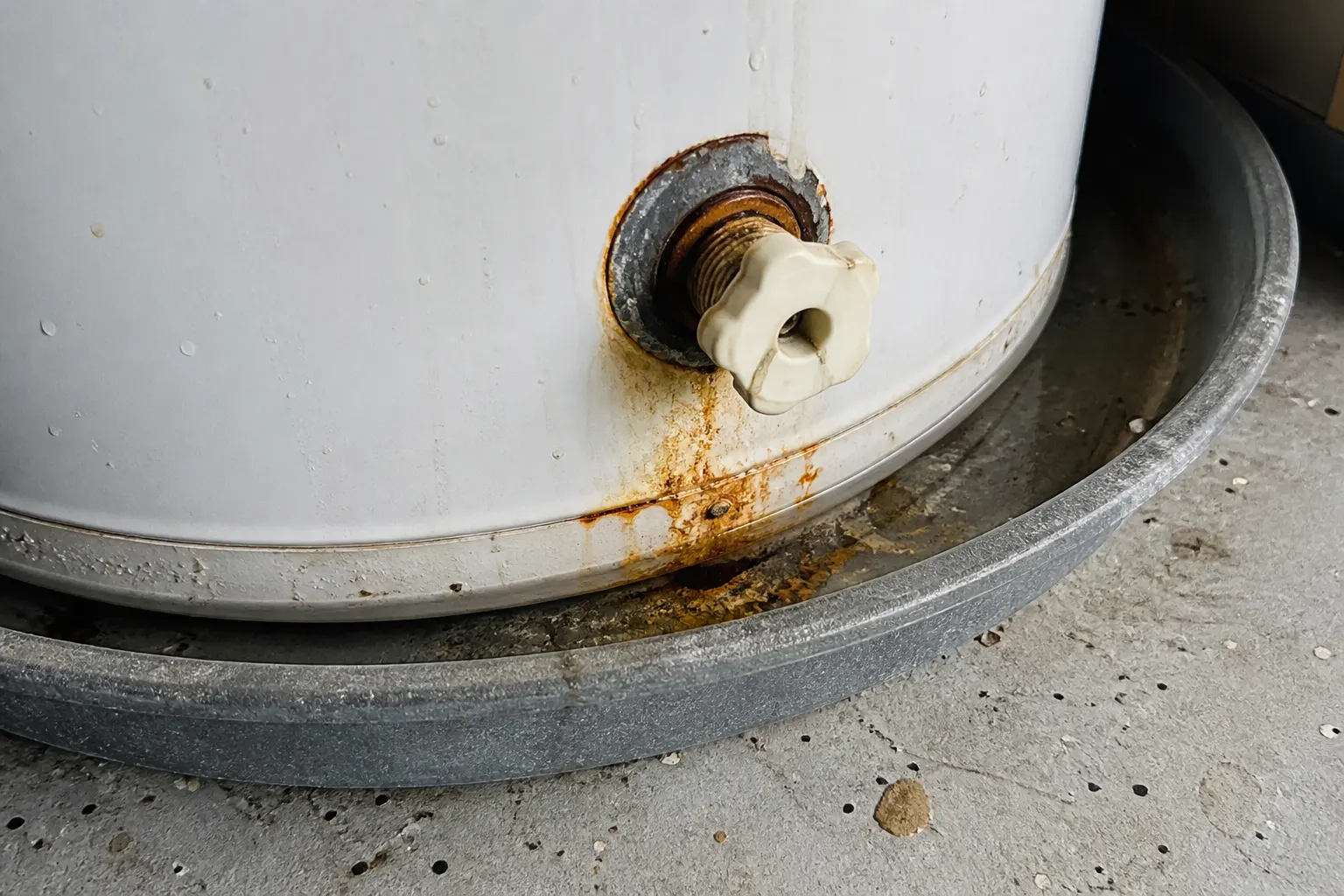
An electric water heater repair in Tampa starts with the floor under the tank. If that floor is wet, the steel is open and no element will save it. If the shell and the pan are dry, the failure is a part, and the part depends on what the shower is doing.
Most Tampa garages still have a 40 or 50 gallon electric tank on 240 volts. Two elements. Two thermostats. The upper one heats first. Only after the top of the tank is hot does the lower element get power. That sequence is why one failed part can look like a dead heater and another can look like a short shower.
No hot water at all
Three things sit in front of a cold shower on a dry electric tank. The upper element. The high-limit switch on that same upper thermostat. The 240-volt breaker in the panel.
The upper element is the one that has to work before anything else does. When it opens, or when the high-limit trips, the lower element never sees power. You do not get a weak shower. You get a cold one.
Look at the breaker before you call. A 240-volt breaker has two poles. One pole can trip while the handle stays in the middle, so it looks on. Flip it fully off, then fully on. If it trips again, leave it off. A breaker that will not hold is not a reset problem. It is a short, a grounded element, or a tired breaker, and it waits for a licensed visit.
The red button under the upper access panel is the high-limit reset. Press it once, with the power handled the way the cover says. If it clicks and hot water comes back, the tank overheated and the limit did its job. If it trips again the same day, stop pressing it. A limit that will not stay in is telling you the thermostat or the element is cooking the water. Monday through Saturday that is a same-day call. Sunday is closed. We do not work overnight.
Do not pull the element covers and start metering a live tank. Those terminals are 240 volts, and a wet garage floor makes a bad place to learn that. We meter both elements and both thermostats with the power off the way the job requires, then we say which part failed.
Lukewarm, then cold halfway through
This one fools people because the first two minutes feel normal. The top of the tank still has a pocket of hot water from the last time the upper element ran. Then the shower dies.
That pattern is the lower element, or the lower thermostat that never calls for it. The upper half of the tank is fine. The bottom half is a tank of cold water with a dead heater in it. You run out as soon as the hot pocket is gone.
Hillsborough water runs about 7 to 10 grains hard. Scale falls to the bottom and buries the lower element. The element heats the mineral layer instead of the water, runs long, and opens. A tank under about eight years with a dry shell is still a repair. We change the element and the thermostat as a pair when one of them is cooked, because the other one has been working overtime.
A broken dip tube can imitate this. Cold water is supposed to enter at the bottom. If the tube has snapped, cold water dumps at the top and you get a short shower on a tank that still heats. Age sorts it. A younger dry tank can take a dip tube. A tank past about 10 years with the same symptom is usually full of scale, and the element is not the real bill.
Tampa water is why the element dies early
National pages still talk about a 12 year element life. On city water here, the lower element often goes sooner because it lives in the sediment. You hear it as a pop or a rumble when the heater runs. That sound is water boiling under a layer of mineral, not a loose pipe.
A yearly flush pulls some of that layer out of a younger tank. It does not rebuild an element that has already opened, and it does not seal a tank that is already leaking. If the pan has grit and the water is still hot, flush it and check the anode. If the pan has water, shut the supply.
The anode is the rod that rusts so the tank does not. When it is gone, the steel is next. Rusty water on the hot side only is the anode talking. A new rod can buy time on a younger tank. Rust plus a wet base is a replacement.
When the repair is the wrong job
Water at the base of the tank, or in the pan with no fitting above it dripping, means the glass lining failed. There is no element for a hole in the steel. Shut the cold supply to the heater. If you cannot find that valve, shut the house main. Leave the breaker off if the pan is wet.
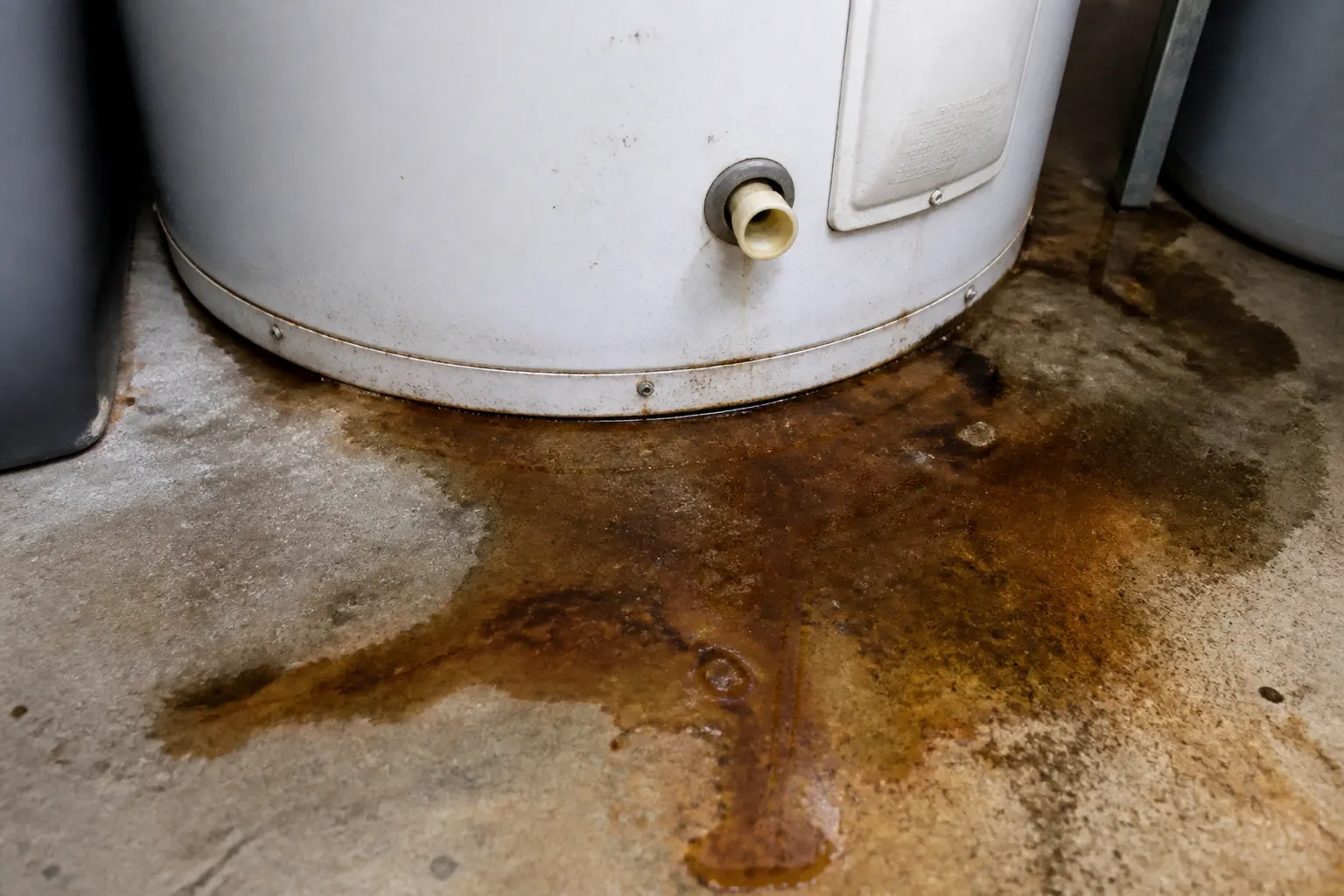
Replace it when any of these are true:
- Water is coming from the tank itself, not from a union or a valve you can see
- The unit is past about 10 years and this is the second part in a year
- Hot water is rusty and the anode is already gone
- The tank pops after a flush, which means the sediment is baked on
- The breaker or the high-limit keeps tripping after a new element
A first element on a six year old dry tank is a repair. A third part on a twelve year old tank is a new heater. The longer version of that line is on water heater repair vs replace.
Gas is a different truck
A gas tank has no elements. No hot water on gas is usually the thermocouple, the igniter, or the gas control, if the shell is dry. Say gas or electric when you call. The access panels on the side of the tank mean electric. A flue hat on top and a gas line at the control mean gas. We stock both, but not on every shelf of the same truck.
Tankless is a third job. An electric tankless that goes cold is often scale in the heat exchanger or a breaker that cannot hold the load, not a screw-in element. That work is on the tankless page.
What we do on the visit
We look at the pan, the age on the label, and the breaker before we unscrew anything. Then we meter the elements. You get a flat rate before we start. A repair that makes sense gets the part the same day Monday through Saturday, when the part is on the truck. A tank that is open gets a replacement quote, not a new element screwed into a wet shell.
Plumbing license CFC1430231 covers the tank, the piping, and the pan. If the breaker, the wire, or the panel is part of why the element failed, that portion is electrical license EC13012958. Same company. Same visit when the board has the truck.
The service page for this call is water heater repair. Closed Sunday. We do not work overnight. Call (813) 933-8010.
Need help with this?
Talk to a real Tampa dispatcher.
Same-day service, flat-rate pricing, A+ BBB rated since 1994.