


Tampa Whole-Home Water Filtration Install: Pre-Filter, Descaler, Carbon, UV. Walk-through of a complete Titan whole-home filtration install in Tampa: hose bib for outside water, pre-filter, descaler, secondary filter, and the UV stage on the inbound line before it hits the rest of the house.
Read the transcript ▼
We're all set. We have the water coming in. We have our hose bib before all the filtration. We have our pre-filter or whole-home water filter. And then we got the descaler. We got another filter. And we got the UV light. And then when it comes in into the house, you're all set.
Whole-Home Water Filtration in Tampa, FL
Most of what damages a Tampa Bay home's plumbing system arrives in the water that flows into it. Sand and sediment from city mains and well systems pile up inside the water heater, eventually reducing its capacity and killing the lower element. Calcium and magnesium scale clog showerheads, faucet aerators, and tankless heat exchangers. Chlorine added at the treatment plant strips the taste out of drinking water and dries out skin and hair. Whole-home water filtration solves the cause rather than chasing the symptoms.
Titan Plumbing and Electric designs and installs multi-stage filtration setups for Tampa Bay homes: a pre-filter that catches sediment, a descaler or softener that handles the hardness, a carbon stage that strips chlorine, and an optional UV stage for bacterial control (useful on well systems and post-storm). We size every stage to your household's actual usage and the water you're starting with.
What Tampa Bay Water Actually Looks Like at the Tap
Tampa Bay's municipal supply averages 7 to 10 grains-per-gallon of hardness, which puts it in the upper end of the 'hard' band on the USGS scale. The water is treated with chlorine or chloramine at the plant for safety, then travels through miles of distribution pipe before it gets to your house. Along the way it picks up sediment from older mains, the occasional iron flake, and the residual minerals dissolved at the source. Well systems skip the treatment plant but pick up everything that's naturally in the local groundwater, which around Tampa includes hardness, sulfur, and (less commonly) coliform bacteria.
On a cut-open Tampa water heater that's been on city water with no filtration for a decade, we routinely pull 5 gallons of sediment out of a 40-gallon tank. That's not an exaggeration. It's what happens when sand and scale accumulate at the bottom of a tank with no upstream filter to stop them. That same sediment riding in from aging city mains is why filtration pairs naturally with a water line repair when the supply is failing, and with the annual backflow testing your utility requires on irrigation and commercial connections.
- Hardness: 7 to 10 grains per gallon of calcium and magnesium
- Chlorine or chloramine added at the treatment plant for safety
- Sediment and the occasional iron flake from aging distribution mains
- On wells: sulfur, extra hardness, and occasionally coliform bacteria
The Four Stages of a Complete Whole-Home System
A 'whole-home filtration system' isn't one box, it's a sequence of stages on the cold-water main that work in order. We design each install around the stages a specific house actually needs, rather than installing a kit that handles problems you don't have.
- Sediment pre-filter: the first stage, captures sand, rust, and visible particles before they reach anything downstream. Cartridges run 6 to 12 months in Tampa water before they need a swap.
- Descaler or softener: a salt-based water softener swaps calcium and magnesium for sodium ions; a salt-free descaler conditions the minerals so they don't bind to surfaces. Both protect the water heater and fixtures. Which one we recommend depends on whether you want zero scale (softener) or salt-free operation (descaler).
- Carbon filter: a tank of granular activated carbon strips chlorine, chloramine, and the taste and smell that come with them. This is the stage that makes the drinking water taste like rainwater again.
- UV light (optional): a sealed UV chamber inactivates bacteria and viruses in the flow. Recommended on well systems, post-flood recovery, and on any line where bacterial contamination has been a concern.
Why Your Water Heater Needs This Most of All
We've said it on camera dozens of times: the water heater is the heart of your plumbing system, and unfiltered Tampa water gives that heart the equivalent of a heart attack. A tank running on filtered water typically reaches its full rated warranty life. A tank running on unfiltered Tampa water often fails inside 6 to 8 years, because the bottom element gets buried in sediment, the burner short-cycles, and pinhole corrosion eats through the tank wall. We've cut open 30-year-old tanks that ran filtered, and 10-year-old tanks that didn't, and the difference inside is dramatic.
That same pinhole corrosion is what our water leak detection crews trace through the pipes downstream, and what eventually drives a repiping. Installing a filtration system at the same time as a new water heater protects the investment from day one. Installing one on an existing heater is also worth doing, the heater that survives the upgrade gets a longer second half of its life, and the next heater you install will last meaningfully longer.
How We Size the System to Your House
Stage sizing is based on three numbers: your peak simultaneous demand (gallons per minute when the household is running), your hardness in grains per gallon, and the number of people in the house. A 1,800 sq ft home with 2 bathrooms and 2 adults on Tampa city water typically lands on a 10 gpm sediment filter, a 32,000-grain softener, a 1.5 cu-ft carbon tank, and (optional) a 12 gpm UV unit. A 3,500 sq ft home with 3 bathrooms and a family of 5 lands on bigger media tanks and a higher-flow UV.
We measure the actual GPM at your service entry on the quote visit rather than guessing from square footage. Undersizing creates pressure drops at peak demand; oversizing wastes capital and slows replacement-cartridge economics. The right number is the one that matches the way your house actually uses water.
Service, Swaps, and Ongoing Maintenance
Whole-home filtration is mostly install-and-forget, with a few scheduled touches that we can handle for you on a maintenance plan so you never have to track the calendar:
- Sediment pre-filter cartridge: every 6 to 12 months in Tampa water
- Softener brine tank: a salt refill every 6 to 8 weeks
- Carbon media: a full-tank swap every 5 to 7 years
- UV lamp: replaced about once a year (roughly 9,000 hours of runtime)
How Filtration Works With the Rest of Your System
Filtration is the cause-side fix, but it rarely travels alone. The biggest beneficiary is the water heater, which is why we so often install a system alongside a heater replacement, and the same protection extends the life of a tankless water heater and keeps a slow drain from rebuilding with scale. For hardness specifically, a dedicated water softener handles the calcium and magnesium that a carbon filter leaves behind, and the two are commonly installed together.
The cleaner the water, the longer everything downstream lasts. The same minerals and sediment that filtration removes are what drive the internal corrosion behind a hidden leak our water leak detection crews get called for, and behind the pinhole failures that eventually lead to a water line repair or a full repiping. Sediment riding in from old city mains is also why a filter pairs naturally with annual backflow testing on irrigation and commercial connections, and why a scaled-up line under the foundation can hide a slab leak.
Homeowners upgrading fixtures fold filtration into a bathroom renovation, the kitchen side ties in through dishwasher and garbage disposal work, and Tampa businesses run it through our commercial plumbing team. From South Tampa to Carrollwood, our licensed plumber crews design, install, and maintain the right stages for your water.
More from the field
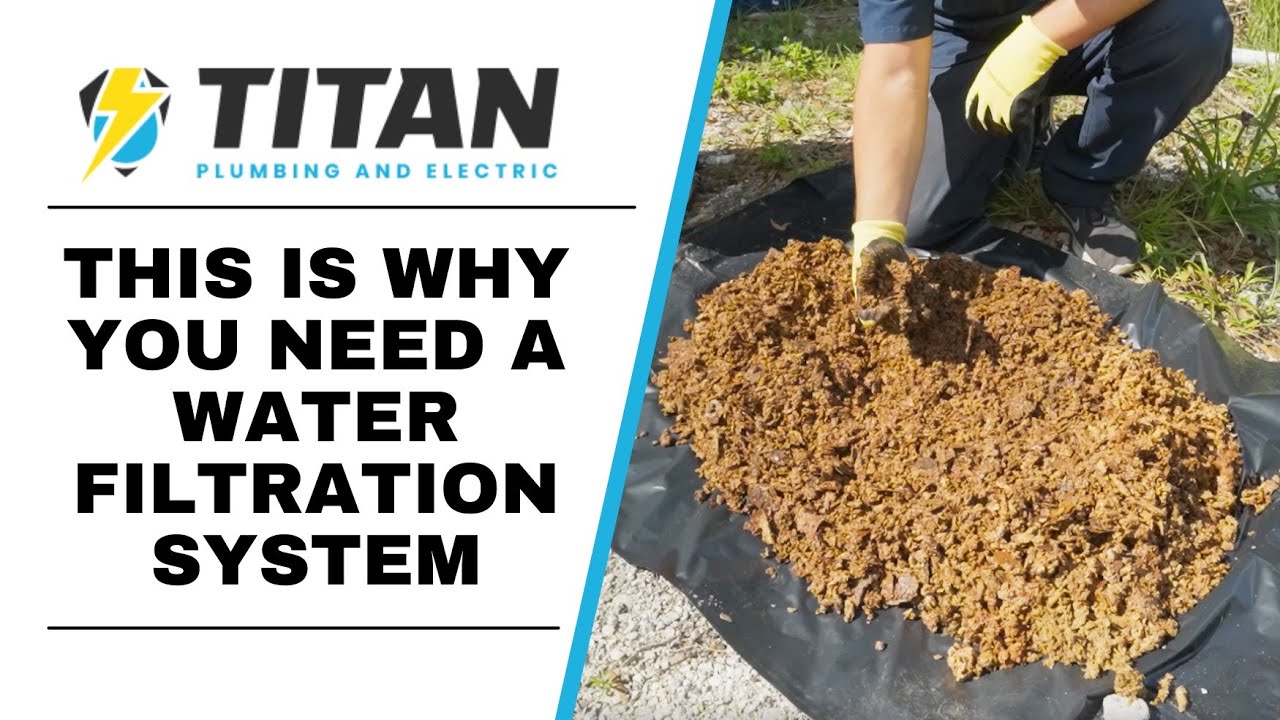
Why You Need a Water Filtration System At Home (A Cut-Open Tampa Heater). Corbin from Titan Plumbing and Electric walks through a heavily sedimented Tampa water heater and explains why a water softener or filtration system protects the heart of your plumbing system.
Read the transcript ▼
Hey everybody, I'm Corbin with Titan Plumbing Electric and today we're taking a look at probably the best example of why a water softener or water filtration system in your home is so important. Not only for your health, but for the health of your plumbing system. They say that the water heater is the heart of your plumbing system. The buildup inside is almost like a clogged artery. Look at this heater with how much sediment is inside here. That's the heart of your plumbing system having the equivalent of a heart attack. This is pounds and pounds of sediment built up over decades. This is why flushing your heater is so important once a year. And to help prevent this, the water softener and the water filtration systems that we sell here at Titan will stop this much from building up in your heater. If you're interested in a water softener or water filtration system, give Titan Plumbing Electric a call.

Why Your Water Heater Needs a Filter System (Inside a 16-Year-Old Tampa Tank). Cut-open of a 16-year-old 40-gallon electric water heater in Tampa, showing the scale and sediment that a whole-home filtration system stops at the source.
Read the transcript ▼
Hey everybody, my name's Corbin. I work with Titan Plumbing and Electric and today I'm going to be cutting open a 40-gallon electric water heater that's 16 years old and we're going to take a look at all the sediment that's inside. All right everybody, I've cut open the 40-gallon electric water heater. Now let's take a look at what's on the inside. Oh wow, look at this scaling. That is a ton of scaling. Now we've talked a lot on this channel about what scaling is and how we can get it out of the heater, but a very important part of water heater maintenance is doing preventative filters. We sell filter systems that we can install in your home that will catch the water coming into your home, filter out all the stuff that causes this sediment, and it can increase the quality of water in your home and increase the longevity of your water heaters. If you would like to get information on filtration systems to keep this out of your hot water, give Titan Plumbing Electric a call.