

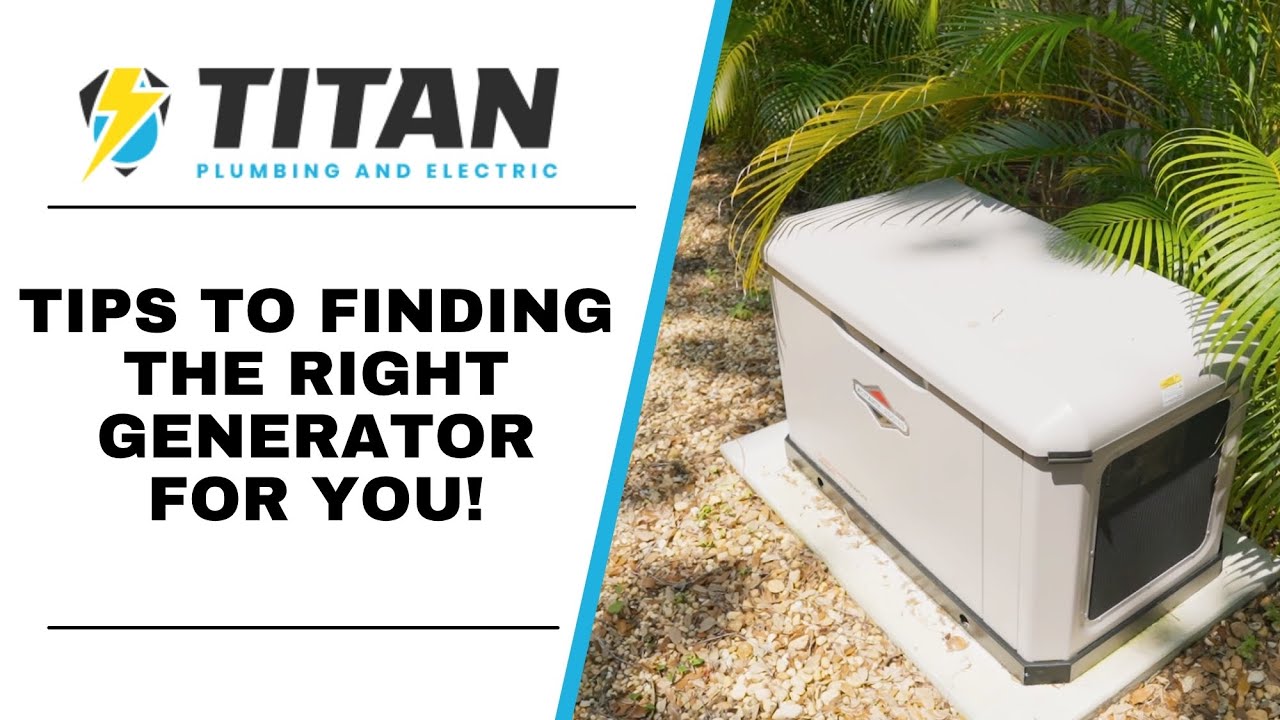
Tips To Finding The Right Generator For You. How Titan sizes a whole-house standby generator: brand selection (Briggs & Stratton, Kohler, Champion), kW sizing for your home and AC count, fuel source (natural gas vs propane), placement setbacks from property lines, windows, doors, and electrical service, plus warranty length by brand.
In this video · 6 chapters ▼
Read the transcript ▼
Today I want to give you some tips on purchasing a whole-house generator. As you see behind me, we have a Briggs & Stratton whole-house generator. The first thing to think about is picking the type of generator and the brand. The type would be whole-house generator. The brand would be probably a Kohler, a Briggs & Stratton, or maybe a Champion generator. The next important tip on a generator is size. The sizing of the generator goes by the size of your house and how many fixtures you have, like air-conditioner units that need to be run off this whole-house generator. Generally speaking, if your house is around 2,000 square feet or smaller and you have one air-conditioner unit, you can probably do a 22 kW generator. If your house is larger, like 2,500, maybe two air-conditioner units, somewhere up to around 4,000 or 5,000 square feet, I would go with a unit like this one, which is a 26 kW. The next important tip you want to consider is the fuel source. Generators usually run on propane or natural gas. If your home has a meter on the side of the house, you have gas coming to the house from the municipality. That's a great way to run your generator. Off of that natural gas. If you don't have natural gas, you would need to get a propane generator. One of the next important features is where the generator is going to be placed. Generally speaking, you'll be 3 ft off any property line minimum. Also, we have to figure in windows and doors. You need to be 5 ft off any windows and doors on your house. Your generator also needs to be fairly close to your electrical service because we're going to be running a service line to the generator over to your electrical panel. Plants and landscaping can also factor into your generator placement. If you have plants in front of the generator, that would be a problem if it's not easy to access, particularly on the exhaust side of the generator. They probably would die if they're closer than 5 ft to the exhaust side. When you're considering generator brands, look at the warranties. Briggs & Stratton has a 7-year warranty, Kohler has a 5-year, and a Champion generator has a 10-year warranty. For more information on generators, go to titanplumbingandelectric.com.
Whole-House Standby Generators in Tampa, FL
When a named storm rolls through Tampa Bay, the power does not come back in an hour. It can be out for days, sometimes weeks, while crews work through downed lines across the region. A whole-house standby generator changes that completely: it senses the outage, starts itself within seconds, and runs your entire home on natural gas or propane until the grid returns. No cords, no gas-station generators, no spoiled food or sweltering nights.
Titan Plumbing & Electric has installed and serviced backup power for Tampa homeowners since 1994. As a family-owned, licensed electrician team, we size the unit to your actual home, coordinate the gas and the pad, wire the automatic transfer switch, and pull the permit so it is inspected and ready before hurricane season, not during it.
Why Tampa Homes Need Standby Power
Florida leads the country in prolonged, weather-driven outages, and our heat makes them more than an inconvenience. A standby generator is about safety and comfort as much as it is about keeping the lights on. For many families it is the difference between sheltering in place and evacuating.
- Keeps the AC and water heater running so your home stays safe and livable in summer heat and humidity.
- Powers medical equipment, refrigeration, and well or sump pumps that cannot wait for the grid.
- Protects food, medication, and a working kitchen through multi-day outages.
- Runs automatically while you are away, so a freezer full of food is not lost on a weekend trip.
How an Automatic Standby Generator Works
Unlike a portable unit you drag out and fuel by hand, a standby generator is permanently installed beside your home and wired into it through an automatic transfer switch. The moment utility power drops, the transfer switch isolates your home from the grid, signals the generator to start, and restores power in seconds, usually before you have found a flashlight.
Because it runs on natural gas or a large propane tank, there is no refueling and no carbon-monoxide risk from running a portable in the garage. It also exercises itself on a weekly self-test so you know it will start when it counts. The transfer switch ties directly into your electrical panel, which is why panel condition and capacity are part of every install.
Generator Brands We Install and Service
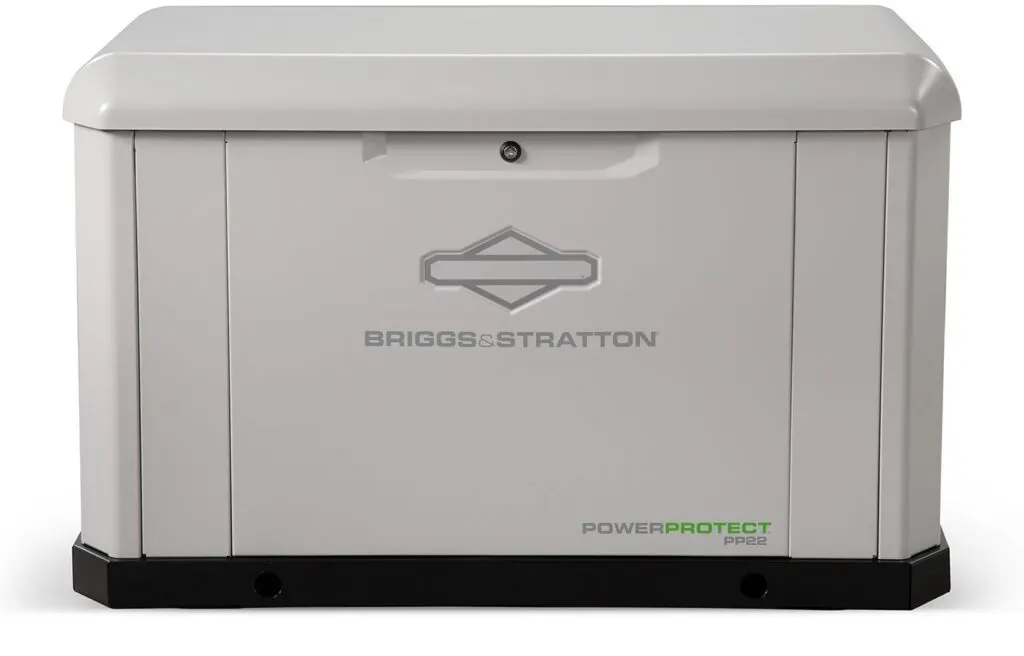
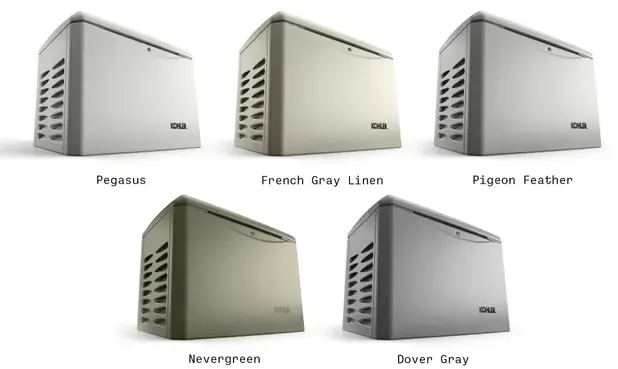
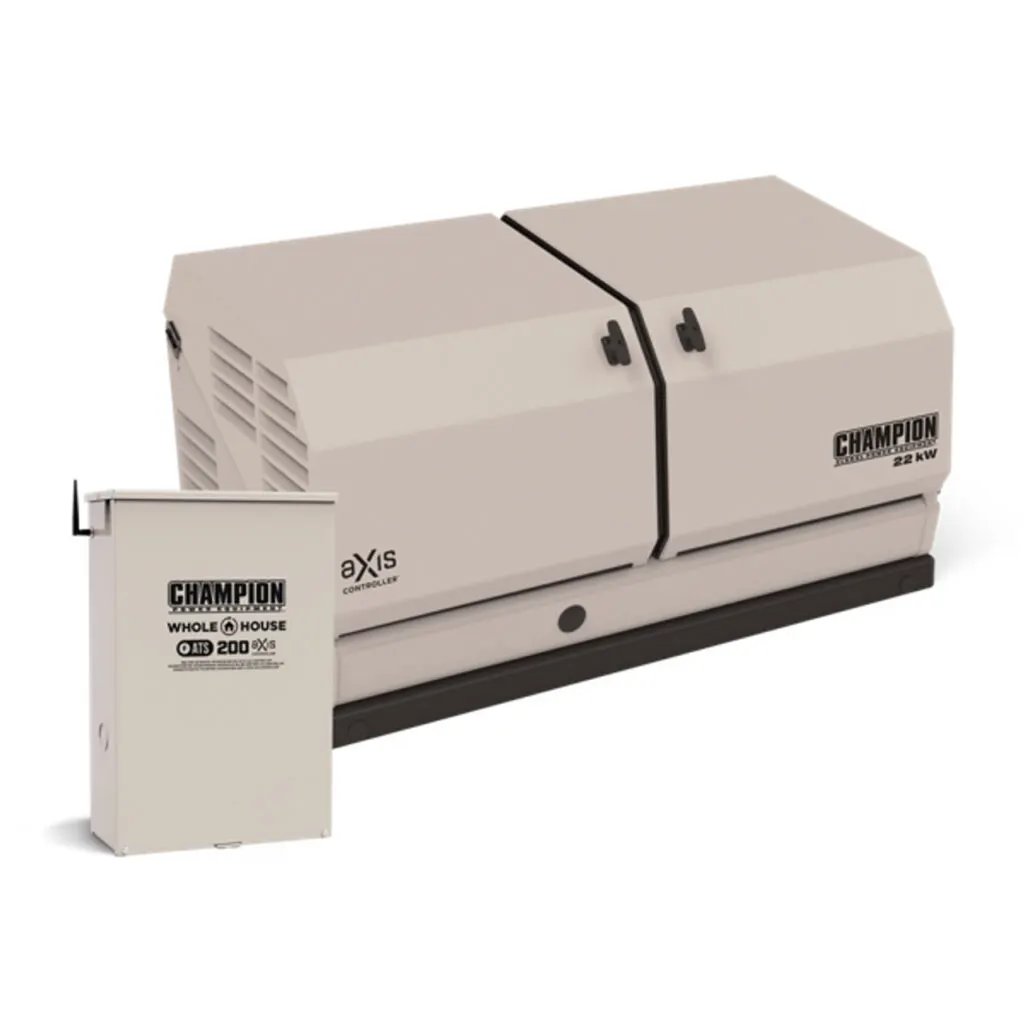
We install and service the industry's most trusted standby brands, and the units in the photos here are real Tampa installs. Briggs & Stratton is known for rugged durability, Kohler pairs advanced controls with fast startup, and Champion offers dependable backup power at an excellent value. If you have been researching Generac, the brand most homeowners ask about, we are happy to walk you through how it compares so you choose the right unit for your home, not just the most advertised one.
- Briggs & Stratton: durable, high-performing units built for tough conditions.
- Kohler: advanced technology, quiet operation, and fast automatic startup.
- Champion: dependable, cost-effective backup power with homeowner-friendly features.
- Honest brand comparisons, including Generac, so the unit fits your home and budget.

Sizing: How Big a Generator Do You Need?
Bigger is not automatically better. An oversized unit wastes fuel and money, while an undersized one leaves you choosing between the AC and the refrigerator. The right size depends on what you want to keep running, from a few essential circuits to the whole house including central air.
We start by asking what you cannot live without during an outage, then measure the real load and check whether your existing panel can support a clean tie-in. Older homes sometimes need a panel upgrade alongside the generator so everything is rated correctly. We give you the options in plain language with flat-rate pricing, the same way we would explain an EV charger circuit or a surge protector add-on.
Installation and Permitting
A standby generator is a permitted project that ties together electrical and gas work, which is exactly the kind of job a licensed electrician should own end to end. Most installs are completed in a day or two once the unit and fuel source are set.
Maintenance That Keeps It Ready
A generator only helps if it starts on the worst day of the year. Like any engine, it needs oil, filters, and a periodic check of the battery, fuel connections, and transfer switch. We offer maintenance visits that catch small issues during calm weather instead of during the storm.
Regular service also keeps your warranty intact and extends the life of the unit. While our crew is out, the same team can handle related work, from a safety inspection to outdoor lighting, so you are not juggling multiple contractors. If a unit ever fails to start during an outage, that is an emergency electrical call and we respond fast.
One Call for the Whole Home
A generator install touches your panel, your fuel line, and your wiring, so it helps to work with a team that does it all. While we are on site we can upgrade an undersized breaker panel, replace aged aluminum wiring, add GFCI outlet protection, install hardwired smoke detectors, or take care of indoor lighting and pool wiring. Many homeowners also add an EV charger circuit at the same time. For restaurants, offices, and other businesses, our commercial electrical team keeps backup power and code compliance covered.
Why Tampa Homeowners Choose Titan
We are family-owned and have served Tampa Bay since 1994, from South Tampa to Lutz, and our generator work carries the same standard as the rest of our electrical services. You get a licensed, insured crew, honest sizing and brand advice, flat-rate pricing up front, and a system that is permitted, inspected, and proven to start.
- Licensed and insured Tampa electricians, family-owned since 1994.
- Whole-home sizing, gas coordination, and transfer-switch wiring handled in-house.
- Permit and inspection included, with $175 OFF active on standby generator installs.
- Backed by a 4.7-star rating across 300+ reviews and a 100% satisfaction guarantee.
More from the field

How Much Does It Cost To Install A Generator?. Realistic price ranges for whole-house generator installation in Tampa, by size and fuel type.
Read the transcript ▼
If you're considering a whole house generator, one of the most common questions is, "What is the cost of a whole house generator installed?" A lot of people see the cost of the generator online and they look and see that a 22 or 24 kW generator is around 56 $7,000 for the unit itself. But that is not the total cost of a generator installation. To get the total cost of the generator installation, you have electrical, plumbing, and setting of the generator to be included. A good price range in Tampa, Florida in 2025 for a whole house generator like the one behind me installed with labor and material is going to run 18 to 25,000. For more information on generators, go to titanplumbinglectric.com. [Music]

Generator Placement: What Goes Into It. Setbacks, ventilation, fuel access, and code: where a standby generator can. And cannot. Go.
Read the transcript ▼
If you're thinking about a whole house generator, we need to think about where the generator is going to be placed. When you look at your property, you want to be at least 3 ft off the property line, 2 ft off of a house, and 5 ft from any windows or doors. You don't want to have the generator too close to an opening because the exhaust fumes could go into the house. So, location of the generator is very important when you're thinking about getting a whole house generator. [Music]