

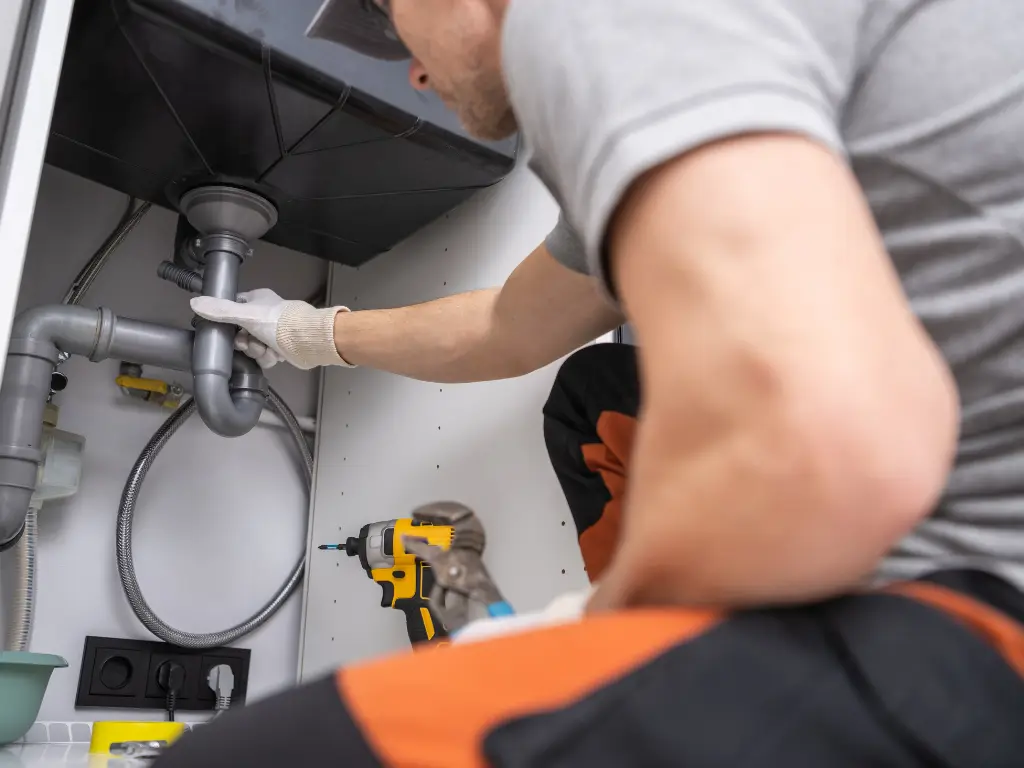
A slow drain is one of those problems that starts small and gets progressively worse. You notice the water in your shower taking longer to go down. A week later, it is puddling around your ankles. A month later, you are standing in a shallow pool every morning. Most people reach for a bottle of chemical drain cleaner at that point. It seems like the fastest fix. But that quick solution can create a much bigger problem down the line.
Understanding why slow drains happen and knowing how to address them safely — without reaching for something that can damage your pipes — is worth the few extra minutes it takes. Here is what actually works.
Why Is My Drain So Slow?
Before getting into solutions, it helps to understand what is actually causing the slow drainage. The most common culprits vary by location in the house:
- Shower and bathtub drains — Hair and soap residue are the primary offenders. Over time, a sticky buildup forms on the inside of the drainpipe, narrowing the opening and slowing the flow. This gets worse gradually, which is why it often catches homeowners off guard.
- Kitchen sinks — Grease, oil, food particles, and soap scum combine to create a congealed mass that adheres to pipe walls. Even if you run hot water after washing dishes, some grease solidifies as it cools further down the line.
- Bathroom sinks — Toothpaste residue, soap, and hair all contribute. The p-trap — the curved section of pipe under the sink — is a common collection point.
- Toilets — While toilet clogs are usually obvious, a slow-flushing toilet can point to a partial blockage in the drain line itself, which may also affect other fixtures in the bathroom.
In Tampa-area homes, older pipes with mineral buildup from hard water can compound these issues. If your home has galvanized steel pipes, internal corrosion creates rough surfaces where debris catches and accumulates more easily.
The Problem With Chemical Drain Cleaners
Most chemical drain cleaners use either sulfuric acid or sodium hydroxide — both highly corrosive substances designed to dissolve organic material. They work by generating heat to melt through a clog. The problem is that they generate that heat against the walls of your pipes as well.
For PVC pipes, repeated use can soften and weaken the plastic. For older metal pipes, the chemicals can accelerate corrosion, particularly if the pipes are already in marginal condition. And if the product does not fully clear the clog — which is common with large or deep blockages — you now have a pipe partially filled with a highly corrosive substance sitting against weakened pipe walls.
If you have used a chemical drain cleaner recently and it did not fully resolve the issue, the smartest move is to call a plumber before the problem gets worse. The chemical residue in the line can also pose a risk to anyone working on the pipes later.
Step One: Try Boiling Water First
The simplest approach first. For minor slowdowns — particularly in kitchen sinks where grease is the likely culprit — boiling water can sometimes do the job on its own. Bring a pot of water to a rolling boil, and pour it slowly down the drain in two or three stages, letting it work for several seconds between each pour.
This will not fix a serious clog, but it can help flush away the early stages of a grease buildup before it becomes a real blockage. Doing this once a month as maintenance can keep drains flowing freely for longer.
Step Two: The Baking Soda and Vinegar Method
For a slightly more involved but still chemical-free approach, baking soda and vinegar create a foaming reaction that can help break down soft blockages. Here is how to do it properly:
- Pour about half a cup of baking soda down the drain.
- Follow with half a cup of white vinegar.
- Cover the drain opening — a plug or a rag works — to keep the foam contained and pushing downward rather than bubbling up.
- Let it sit for 15 to 30 minutes.
- Flush with a pot of very hot water — just below boiling.
This works best on organic material like hair, soap residue, and light grease buildup. It is not a solution for a fully blocked drain or for blockage caused by foreign objects, but it is a useful tool for slow drains that are not yet completely stopped up.
Step Three: Use a Drain Snake for Deeper Blockages
If the slow drain persists after boiling water and the baking soda treatment, the clog is probably further down the line than those methods can reach. A manual drain snake — also called a plumbing auger — is the next tool to try.
A basic drain snake is an inexpensive item that every homeowner should have. You feed the flexible cable into the drain until you feel resistance, then rotate the handle to break through or catch the blockage. When you pull it back out, you often bring the material with it.
For shower and bathtub drains, remove the drain cover first. For bathroom sinks, you may need to remove the p-trap to access the drain line directly. For kitchen sinks with a double basin, make sure to access the drain from the side that is running slow — not the side with the garbage disposal, if present.
If you have tried snaking the drain and it still will not clear, the blockage is likely in the main drain line rather than in the branch line serving one fixture. That is when it is time to call in a plumber with professional-grade equipment.
When to Call a Professional for Drain Cleaning
There are several situations where a DIY approach is not the right move — not because you cannot try, but because the risk of making things worse is too high:
- If snaking a drain brings up no material but the drain still runs slow, the issue may be further down the line or the result of pipe damage
- If multiple drains in your home are running slow at the same time, that points to a main drain issue rather than an individual fixture problem
- If you smell sewage or notice sewage backing up into a floor drain or lowest drain in the house
- If you have recently used chemical drain cleaner and the drain is still blocked — the residue can be hazardous for a plumber to work with
- If your home has older pipes that are in questionable condition, mechanical snaking may risk damaging them
Our team handles drain cleaning in Tampa and throughout the surrounding areas. For serious or recurring drain issues, we use hydro-jetting equipment — high-pressure water that clears the inside of the pipe more thoroughly than a standard snake, particularly for grease buildup and scale that accumulates over years.
Services We Offer
Drain problems are one of the most common service calls for plumbers, and the root causes can range from a simple hair clog to a collapsed section of sewer line. Our team has the equipment and experience to handle both routine drain cleaning and more complex drain and sewer issues:
- Drain cleaning — For sinks, showers, tubs, and floor drains, we clear the blockage using the appropriate method for the situation — snake, hydro-jet, or hand removal.
- Hydro-jetting — For heavy grease accumulation, scale buildup, or roots that have infiltrated a drain line, hydro-jetting uses high-pressure water to thoroughly clean the interior walls of the pipe.
- Sewer line repair — When a drain issue stems from damage to the main sewer line — root intrusion, collapse, offset joints — we assess the situation and recommend the most practical repair approach.
- Camera inspection — For recurring drain problems where the cause is not obvious, we run a camera through the line to get a direct view of what is happening inside the pipe.
- Garbage disposal installation and repair — If your kitchen drain issues are related to a malfunctioning or aging garbage disposal, we install and service these as part of our standard plumbing work.
Browse our full range of plumbing services or get in touch to discuss what is happening in your home.
Areas We Serve
We are a locally owned and operated plumbing company serving homeowners and businesses throughout the Tampa Bay region. Our drain cleaning teams are familiar with the types of plumbing systems common in the area — including homes with older galvanized pipes, homes on slab foundations where drain lines run underground, and properties with mature trees whose root systems can intrude into sewer lines:
- Tampa
- Carrollwood
- New Tampa
- Lutz
- Odessa
- Land O’ Lakes
- Citrus Park
- South Tampa
- Westchase
- Temple Terrace
- And all surrounding communities
View our complete service area listing or reach out directly and we will confirm coverage for your address.
FAQ — Safe Drain Cleaning
Is baking soda and vinegar safe for all types of pipes?
Yes. Unlike chemical drain cleaners, the baking soda and vinegar method is safe for PVC, copper, and older metal pipes. It is a mild abrasive and foaming cleaner that will not damage pipe materials. Just make sure to flush thoroughly with hot water afterward.
How often should I clean my drains to prevent clogs?
A monthly maintenance habit of flushing drains with hot water — and occasionally using the baking soda and vinegar method — can significantly reduce the rate at which buildup accumulates. If you have a garbage disposal, running it with ice and a small amount of dish soap weekly helps keep the blade area clean.
Can I use a chemical drain cleaner if nothing else works?
We do not recommend it. If you have tried the methods above and the drain is still slow or blocked, call a plumber. Chemical cleaners can damage your pipes and create a safety hazard for anyone working on the drain later. A professional drain cleaning is a better solution for the problem and is better for the long-term condition of your plumbing.
Why does my kitchen sink drain fine but smell bad?
A slow-draining sink often has organic material decomposing in the drain line, particularly in the p-trap. Running hot water after each use, using the baking soda and vinegar method monthly, and occasionally flushing with a pot of boiling water all help. If the smell persists, it could be coming from a dry p-trap (if a drain has not been used in a while) or from buildup further down the line that needs professional cleaning.
Is hydro-jetting safe for old pipes?
Hydro-jetting uses very high water pressure — typically 1,500 to 4,000 PSI — which can be too much for pipes that are already in poor condition. A plumber will assess the condition of the pipes before recommending hydro-jetting. For older or more fragile pipes, a mechanical snake is usually the safer choice.
My shower drain smells like mildew even after cleaning. What else could it be?
The smell could be coming from biofilm buildup deep in the drain, from a dry p-trap, or from a leak under the shower base that is causing hidden mold. If cleaning the drain cover and flushing the drain does not resolve the smell, it is worth having a plumber take a closer look.
Dealing with a slow or clogged drain? Our plumbing team is available to help. Contact us online or call to schedule service. We serve homeowners throughout Tampa and the surrounding communities, and we make it a priority to get to drain calls quickly.
Titan Plumbing & Electric | Serving Tampa and surrounding communities | View all service areas
Need help with this?
Talk to a real Tampa dispatcher.
Same-day service, flat-rate pricing, A+ BBB rated since 1994.